Introduction
Within Joblogic you have the ability to mark your Customers, Sites and Assets as Inactive or Suspended.
This is useful when you want to differentiate between active accounts/assets that can still be worked on and items that are suspended for any number of reasons, such as waiting on finances or business closure, for example.
This guide will walk you through how to suspend a Customer, a Site and an Asset and also explain what this will mean for your business processes.
Suspending a Customer
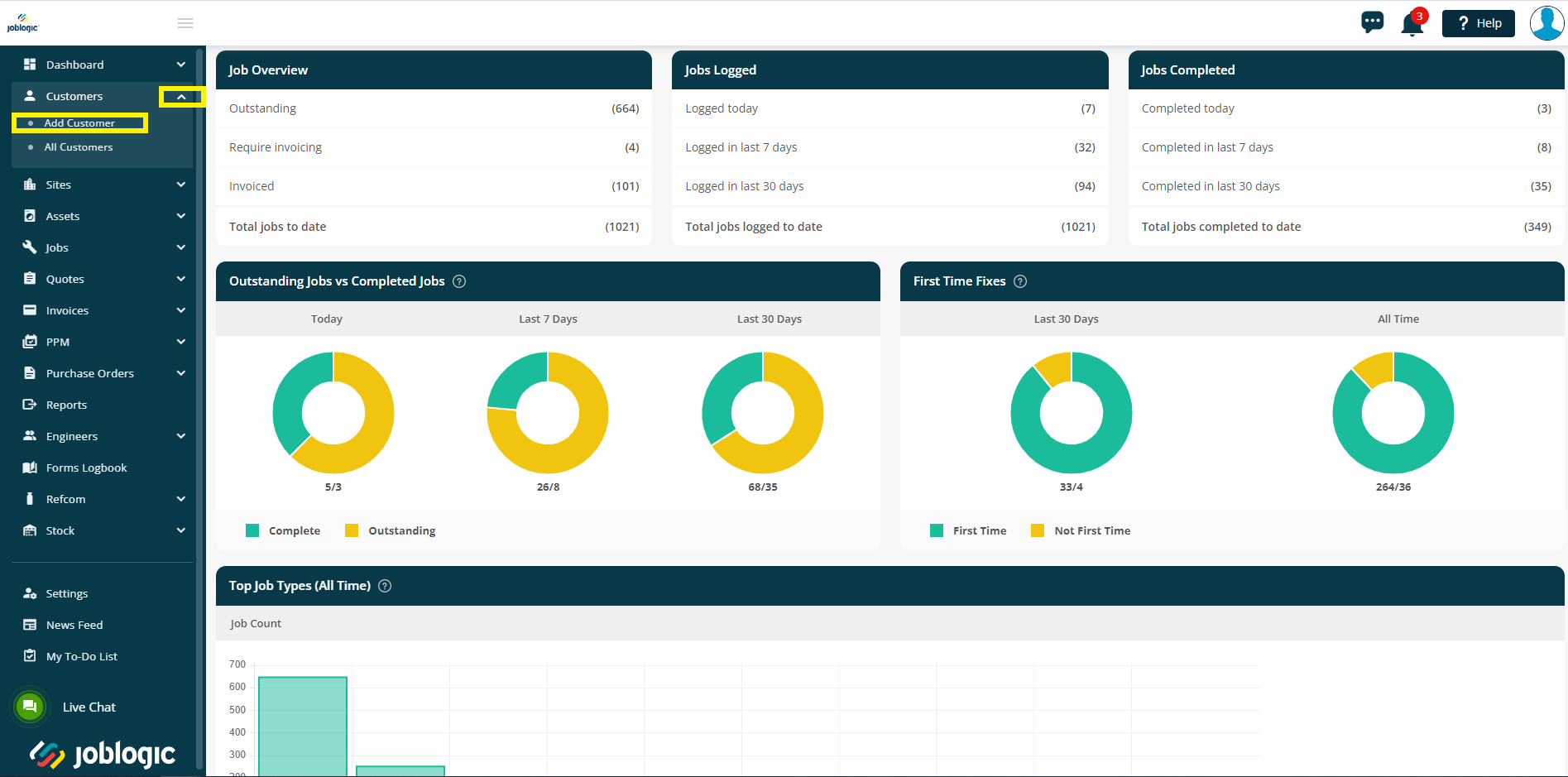
In order to view customers in Joblogic, navigate to the customers area via the left side menu and select ‘All Customers’
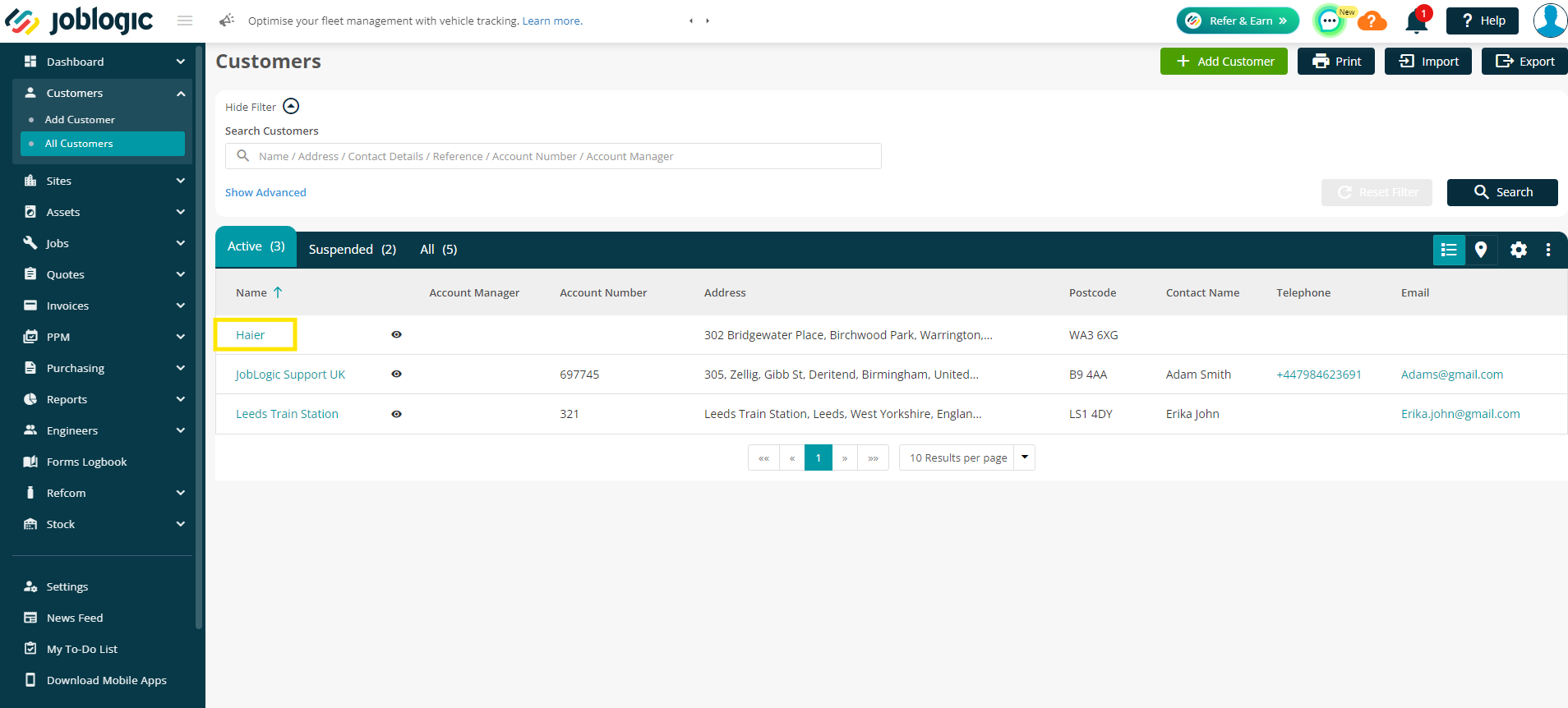
Once in the All customers area, click on the name of the customer you wish to suspend.
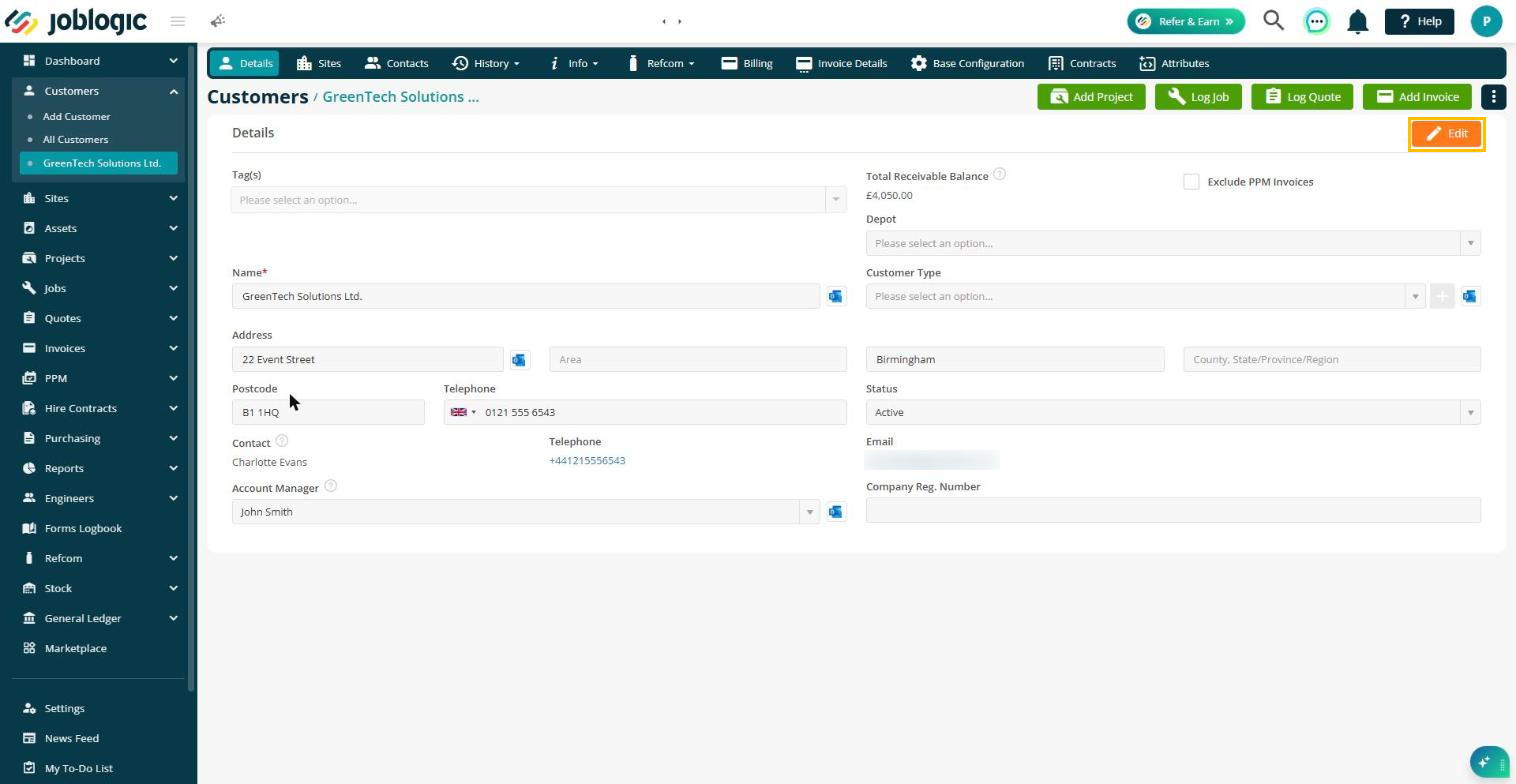
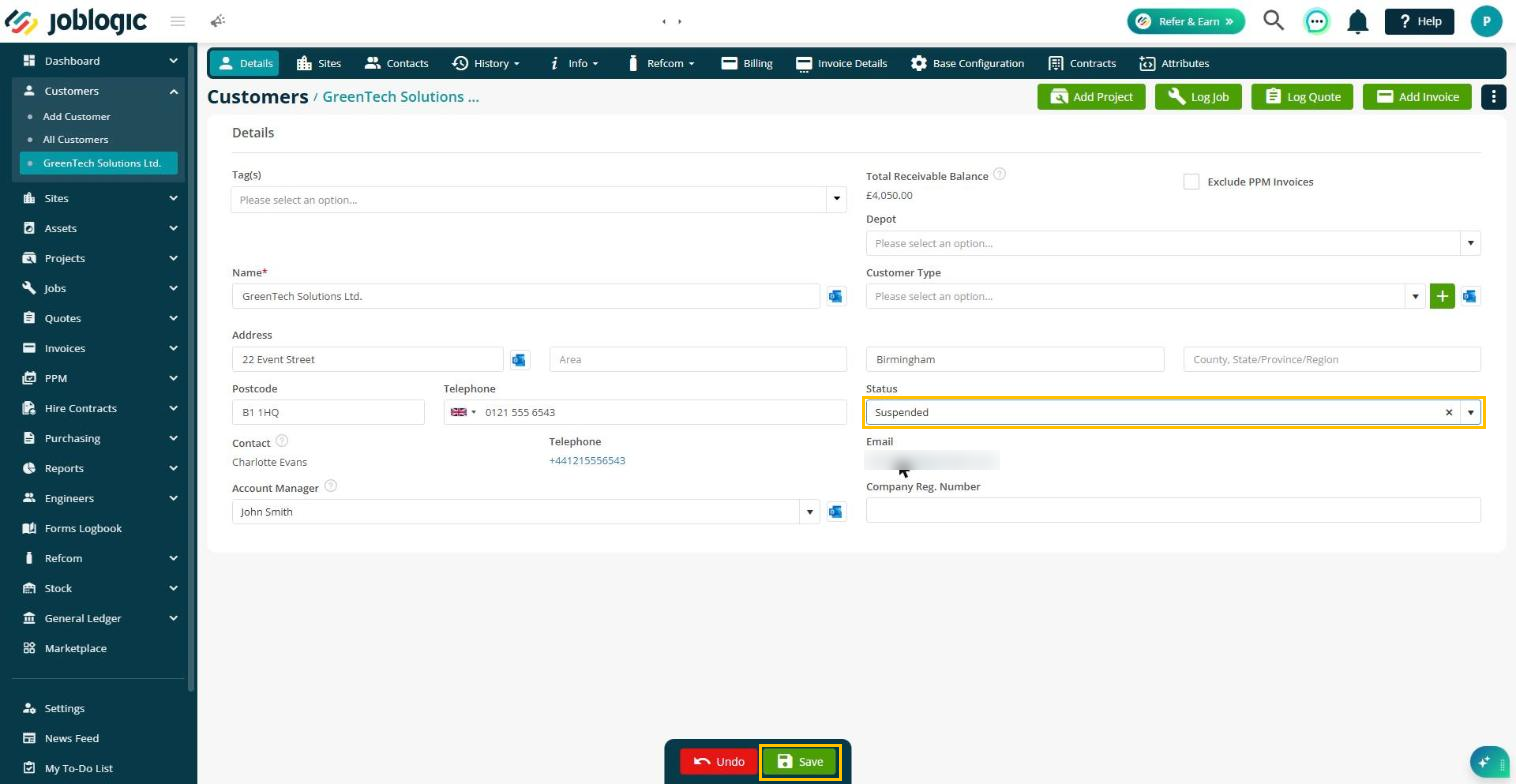
To make any changes to the customer details, click the edit button in the top right.
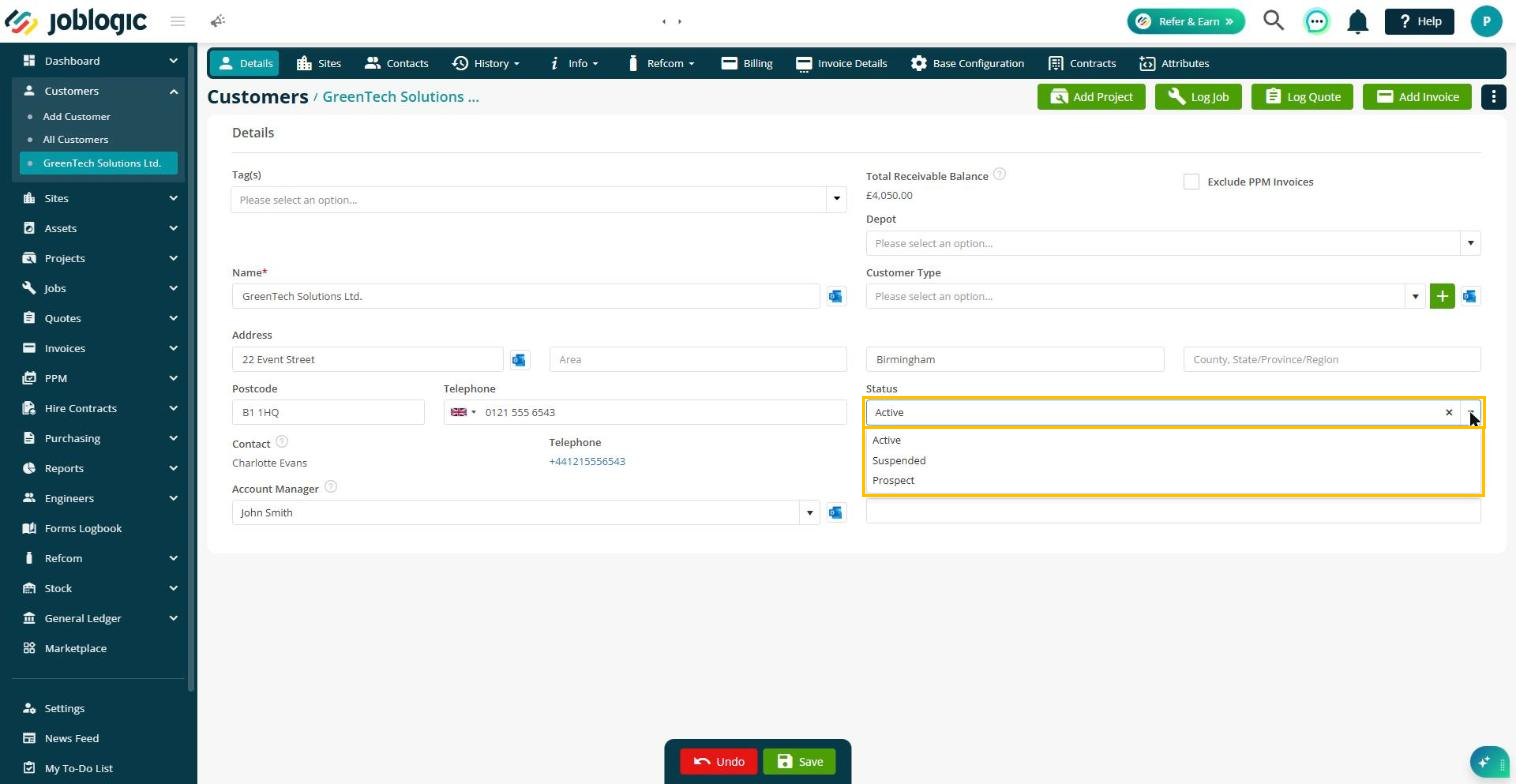
The Status field controls the customer's status in the system. Active means jobs can be logged against them. The other options are Suspended and Prospect.
To suspend the customer, set Status to Suspended.
Click Save to finalise your changes.
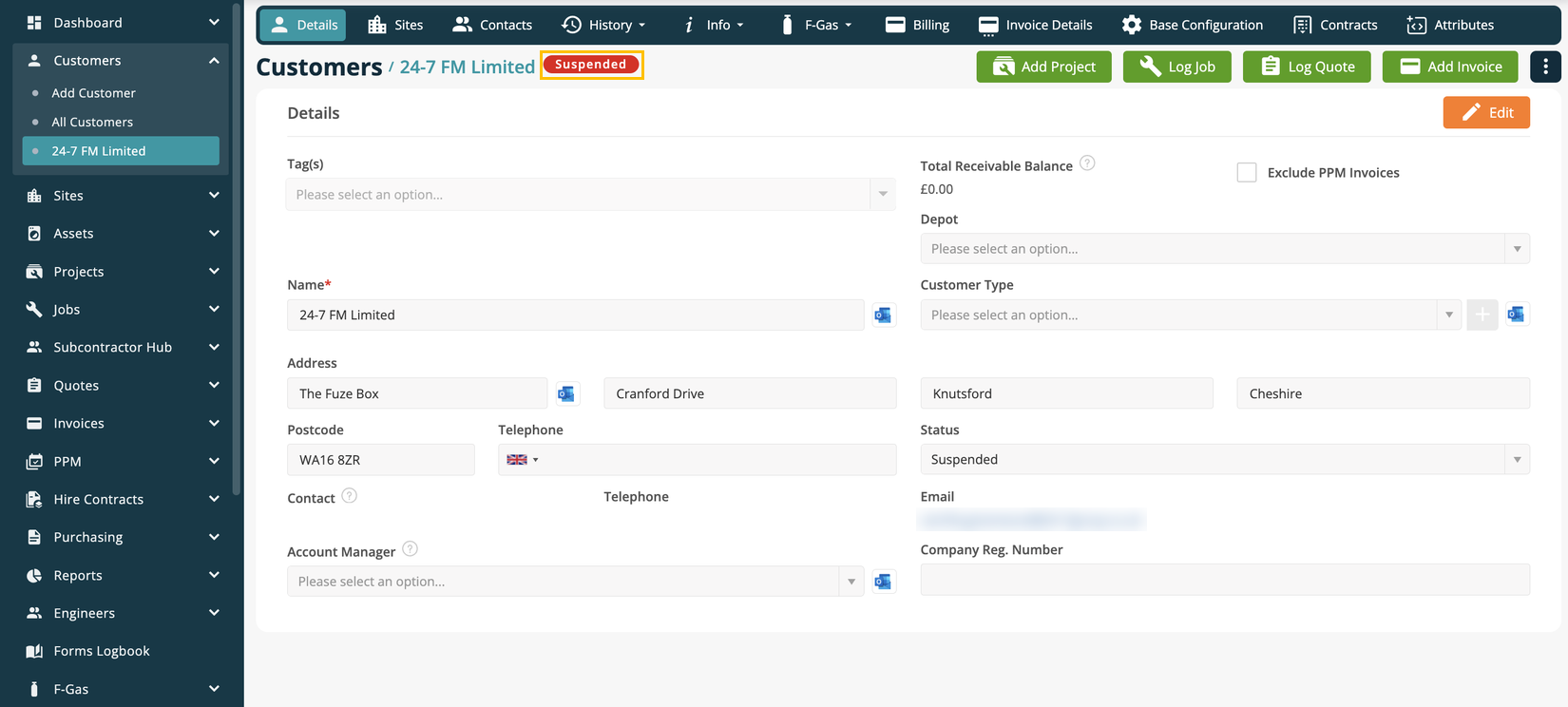
The Customer will now be marked as Suspended. A label will appear at the top of the Customer Details page to specify this.
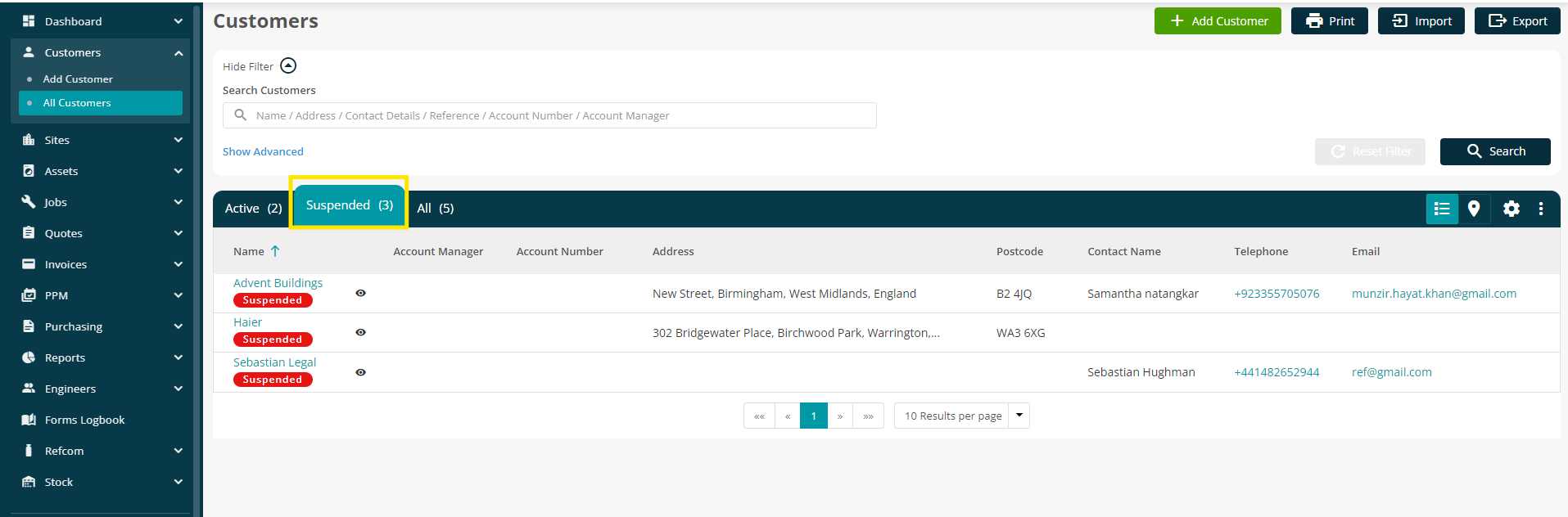
Back on the All Customer list, your Suspended customers are easily identified by clicking into the Suspended tab.
It is important to note that once a customer is suspended, they will not appear in the customer's dropdown while logging new work. But the historical data will remain intact and will be available for you to preview anytime. The Log Job and Log Quote buttons are still shown on a suspended customer, but the customer is no longer offered in the customer list when you log new work.
If the situation changes again, follow the same steps and set Status back to Active.
Suspending a Site
In order to view sites in Joblogic, navigate to the Sites area via the left side menu and select ‘All Sites’
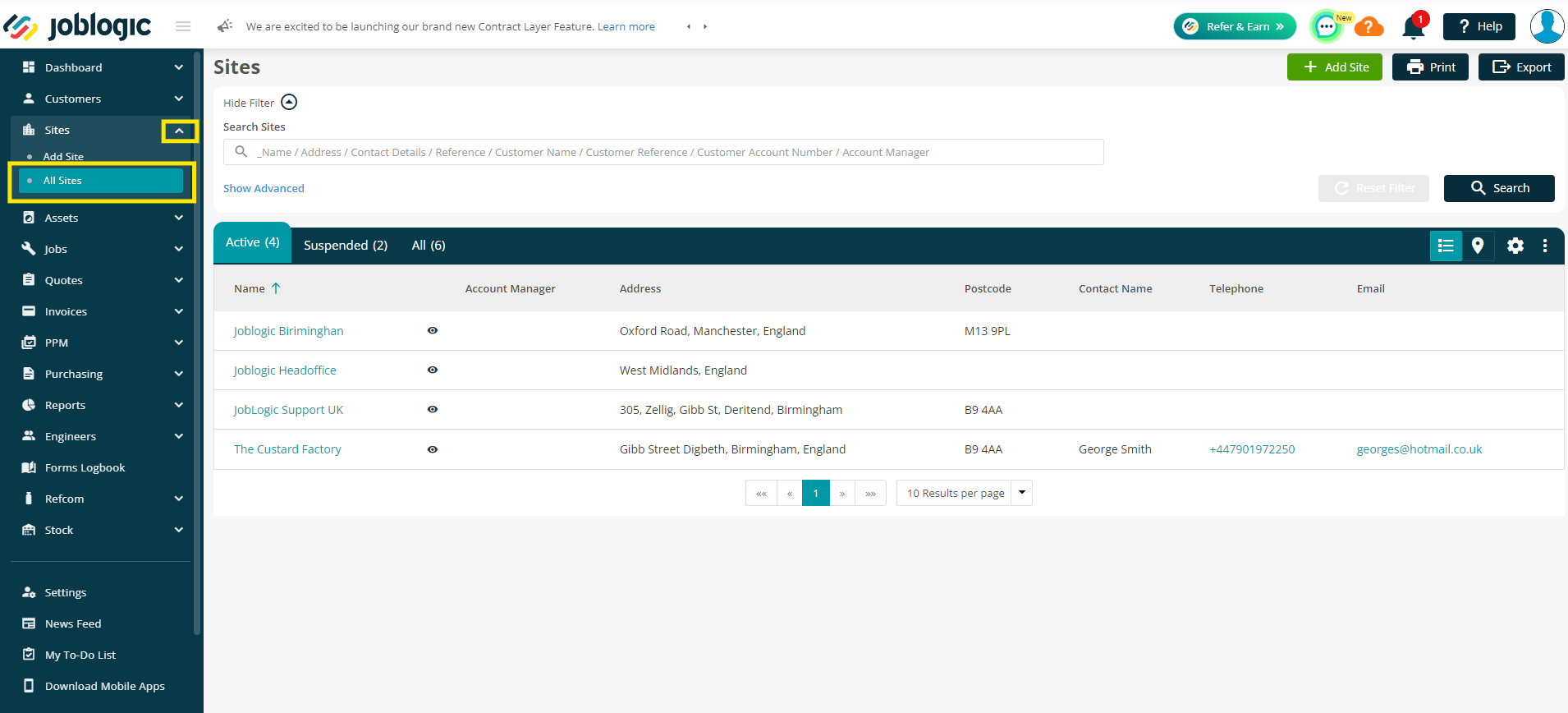
Once in the All sites area, click on the name of the site you wish to suspend.
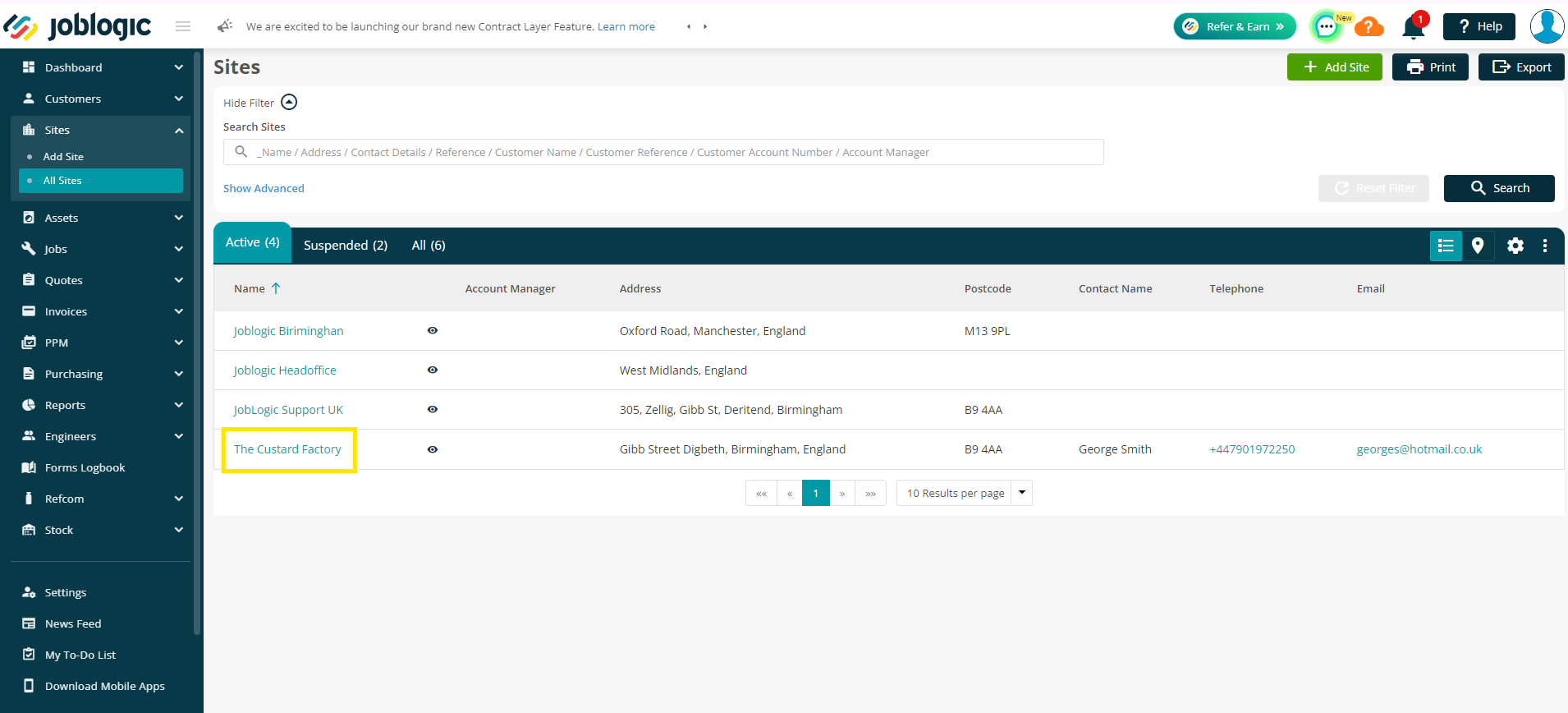
To make any changes to the site details, click the edit button in the top right.
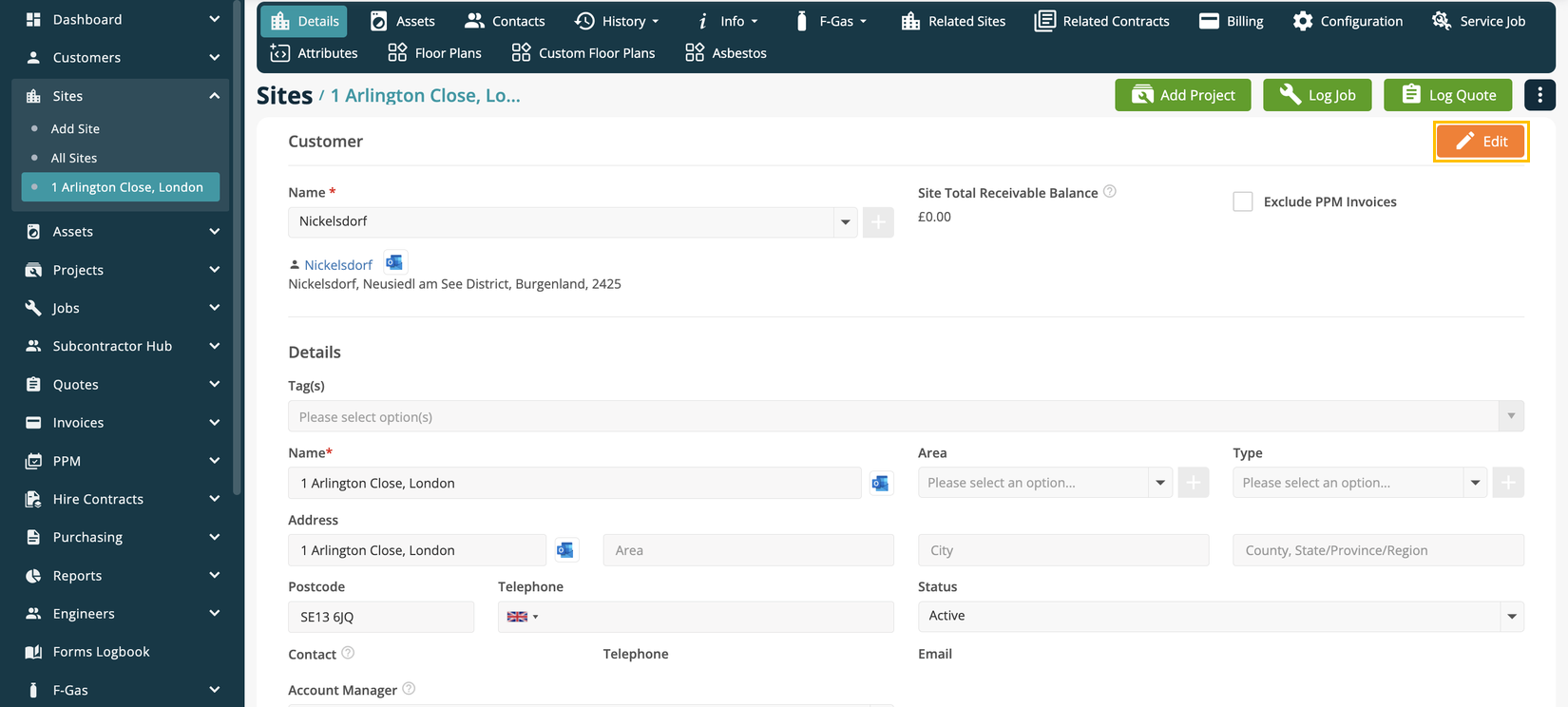
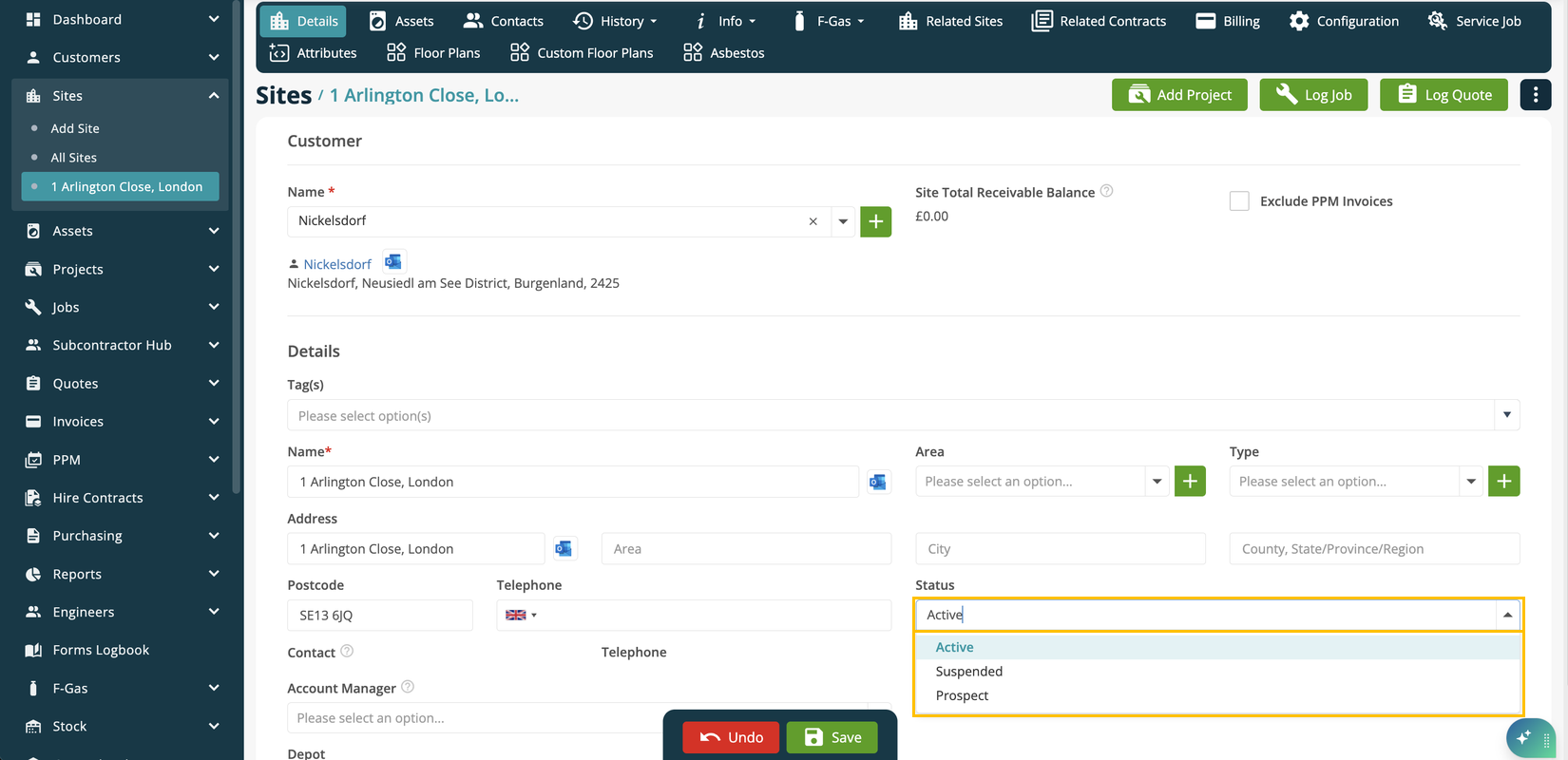
The Status field controls the site status in the system. Active means jobs can be logged against it.
To suspend the site, set Status to Suspended.
Click Save to finalise your changes.
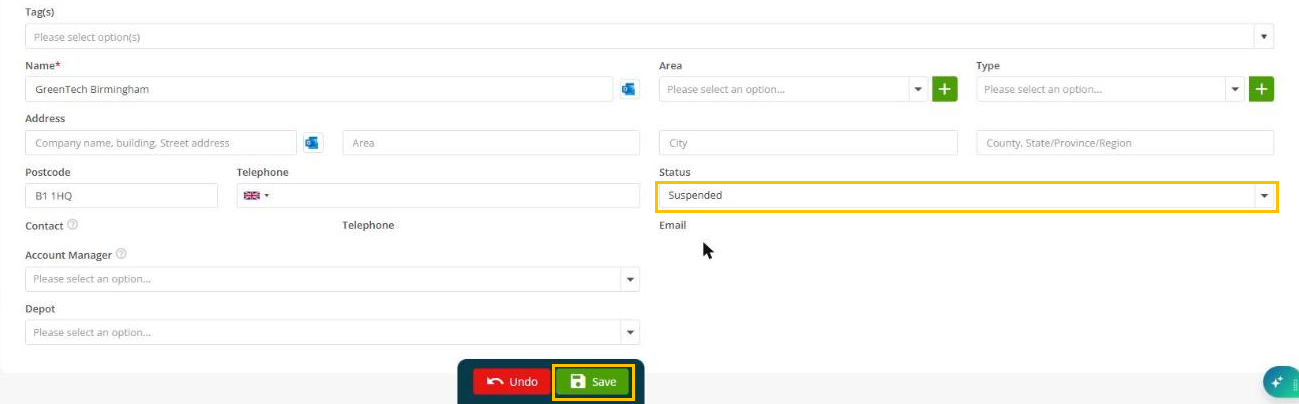
The Site will now be marked as Suspended. A label will appear at the top of the Site Details page to specify this.
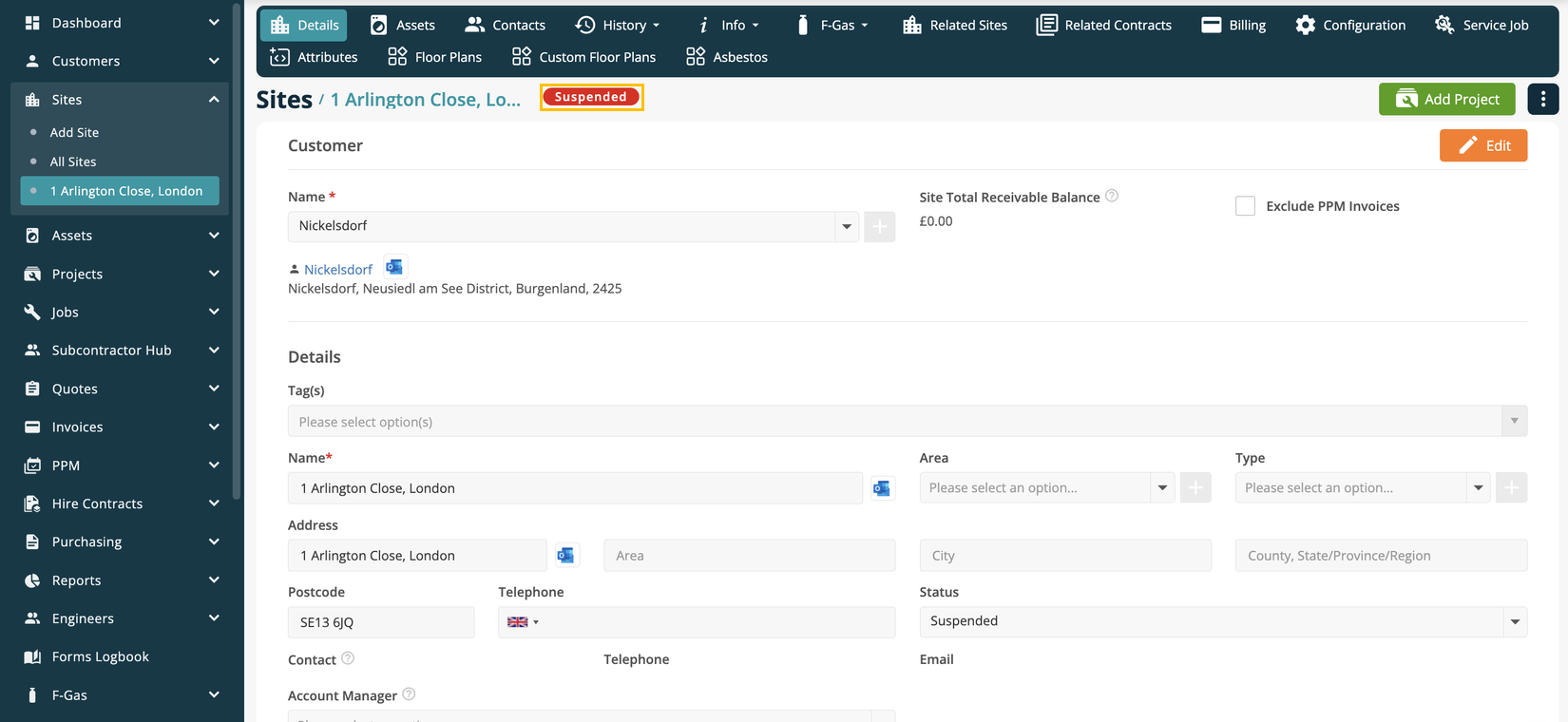
On a suspended site the Log Quote and Log Job buttons are hidden, so it is clear that no new work can be created. Any quote linked to the suspended site also shows a red Suspended label.

Back on the All Site list, your Suspended sites are easily identified by clicking into the Suspended tab.
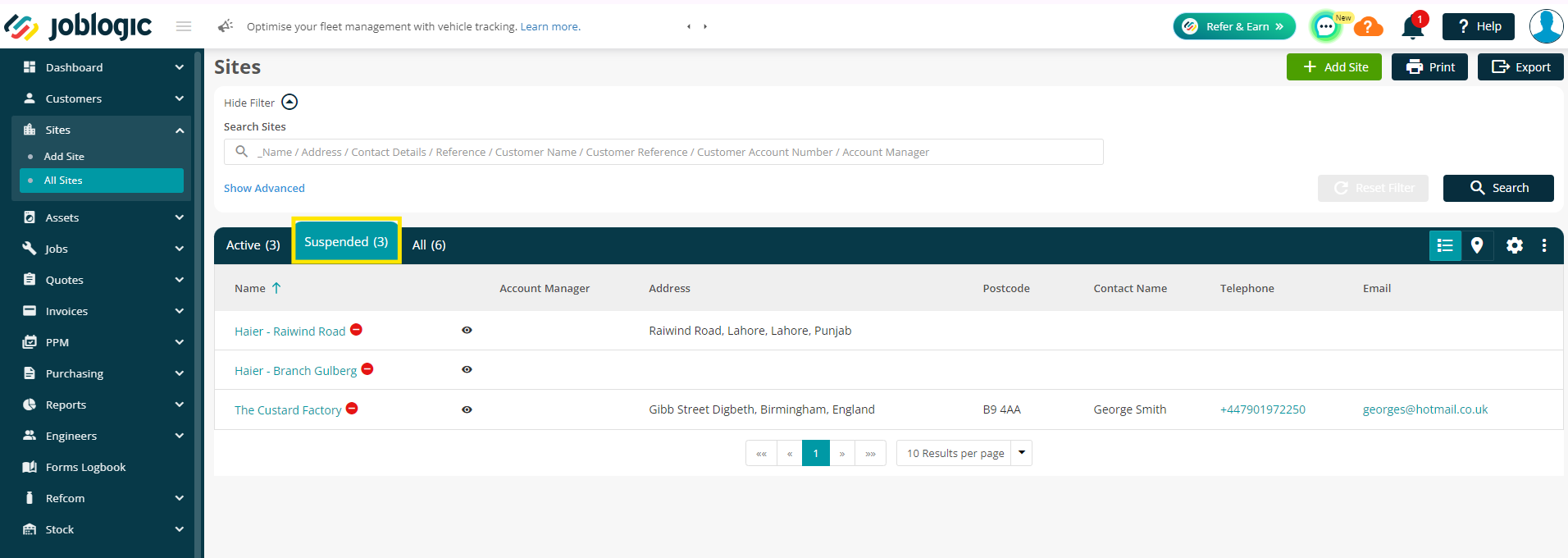
It is important to note that once a site is suspended, they will not appear in the site's dropdown while logging new work. But the historical data will remain intact and would be available for the user to preview anytime.
If the situation changes again, follow the same steps and set Status back to Active.
Suspending an Asset
In order to view customers in Joblogic, navigate to the Assets area via the left side menu and select ‘All Assets’
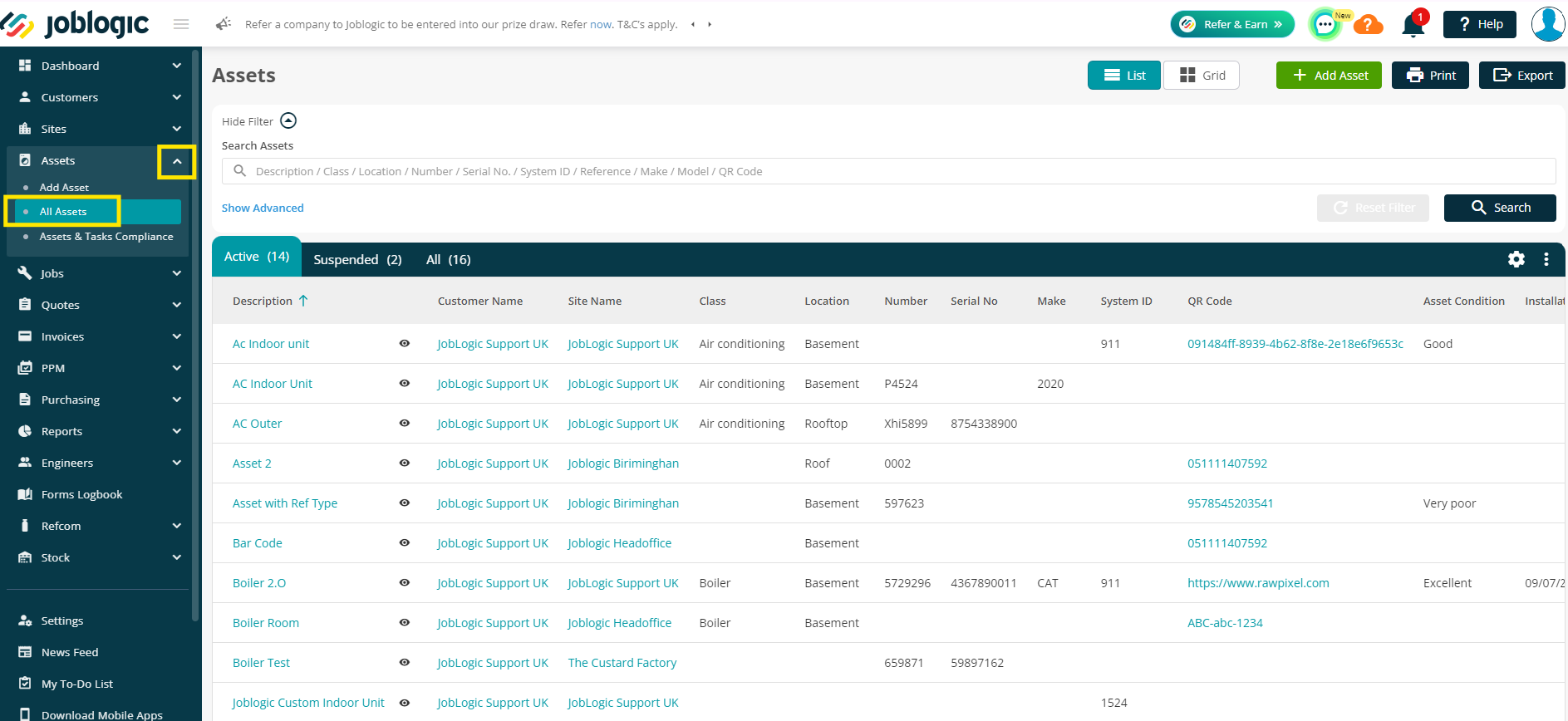
Once in the All assets area, click on the name of the asset you wish to suspend.
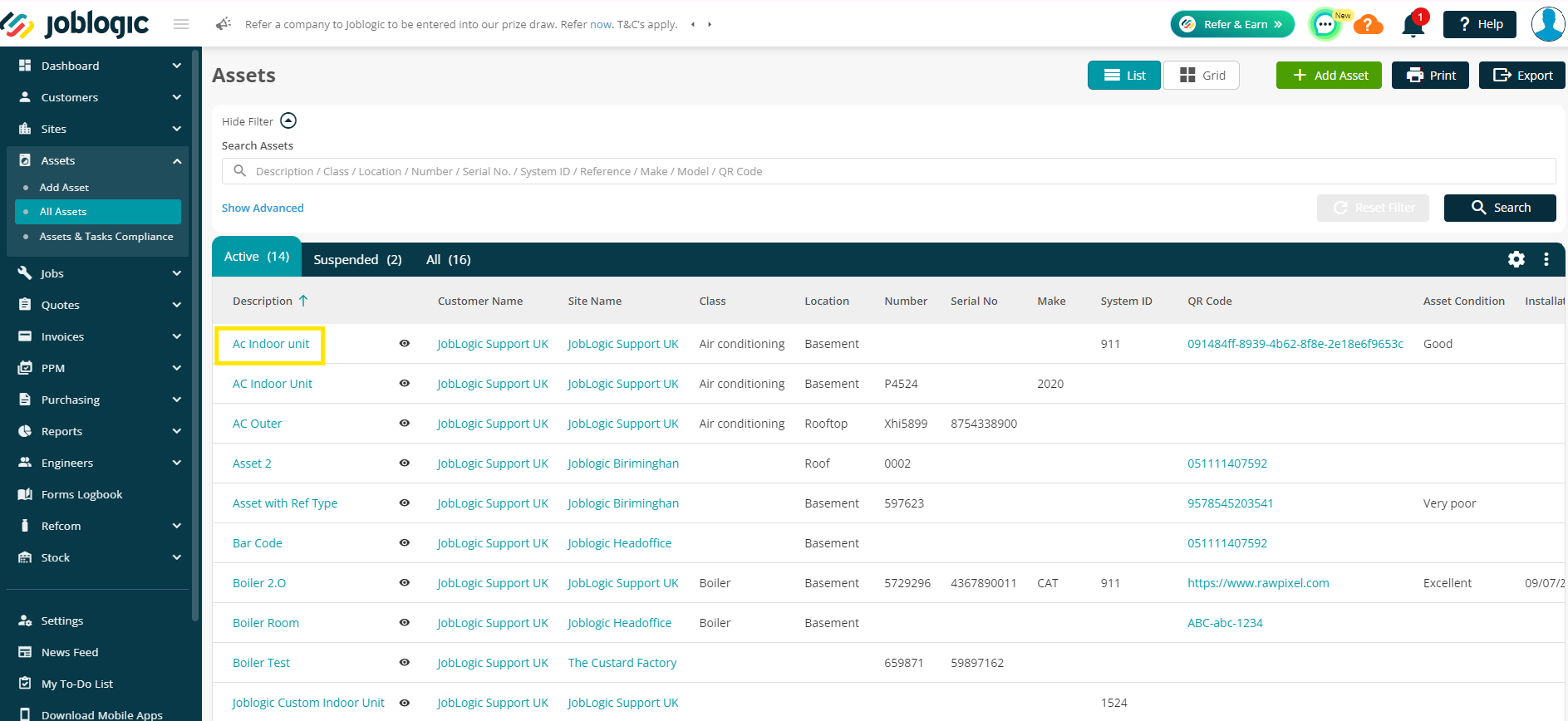
To make any changes to the asset details, click the edit button in the top right.
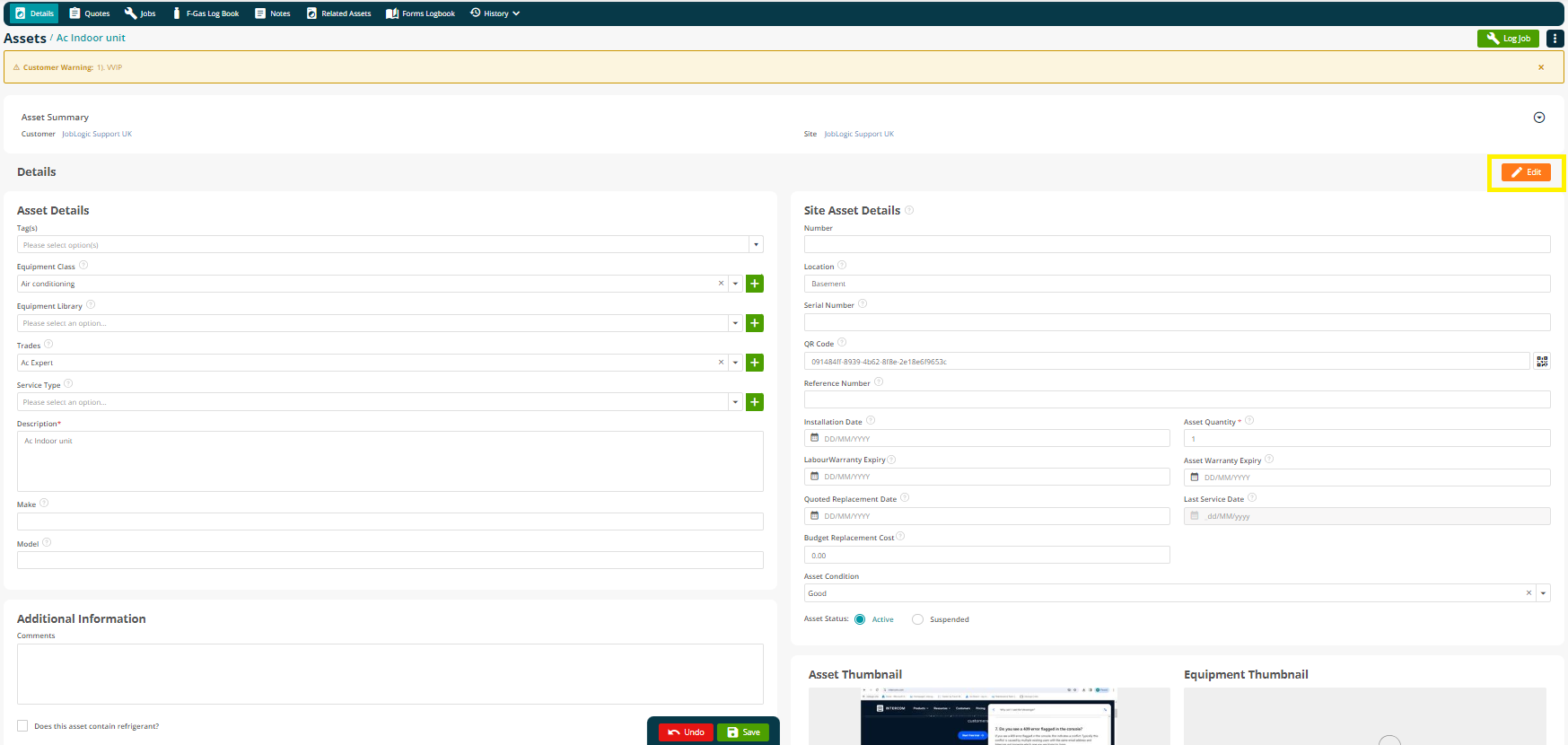
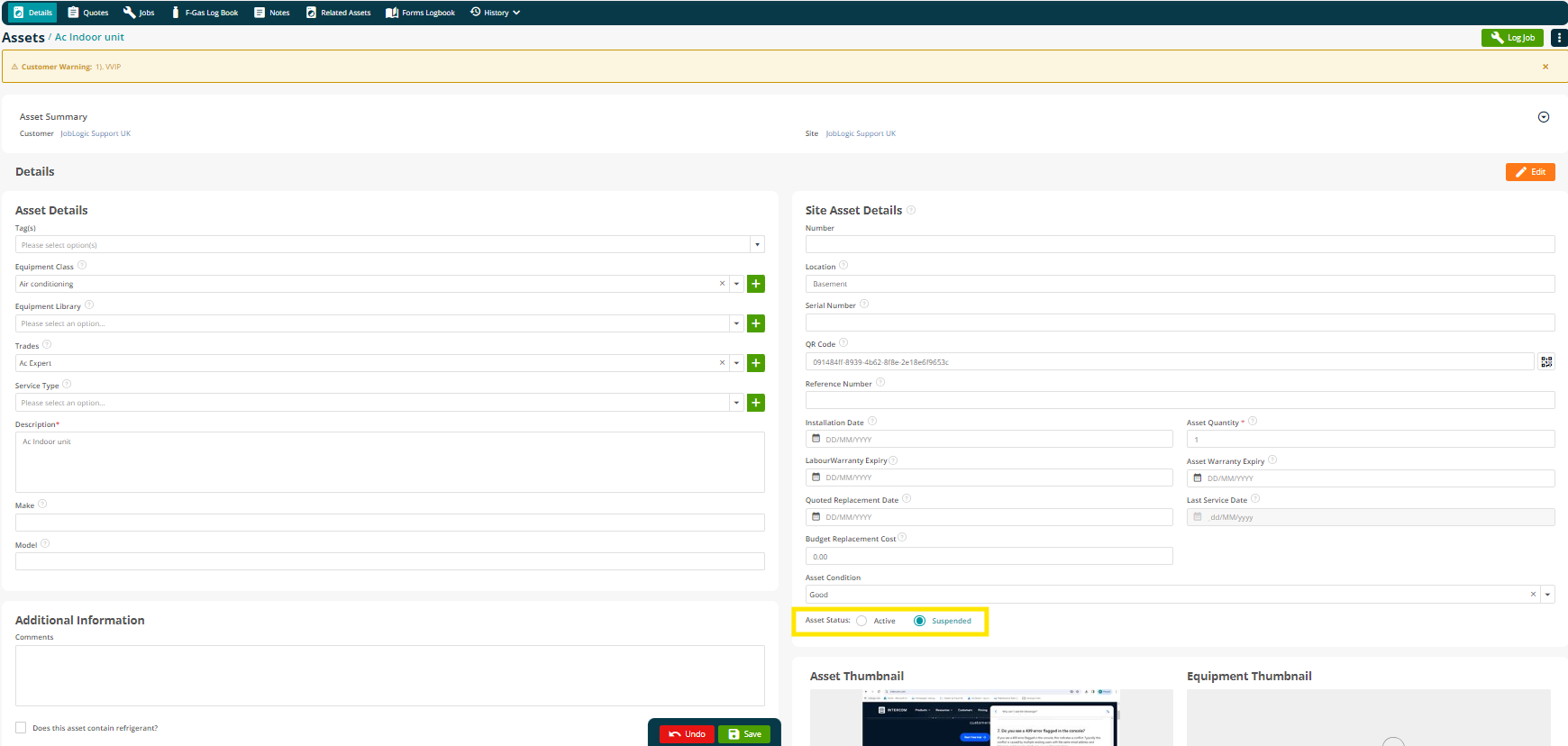
The Active radio button controls the asset status in the system, which if checked means it is Active and jobs can be logged against them / it can be serviced on jobs.
To make the Asset Inactive/suspended, the Suspended option needs to be selected.
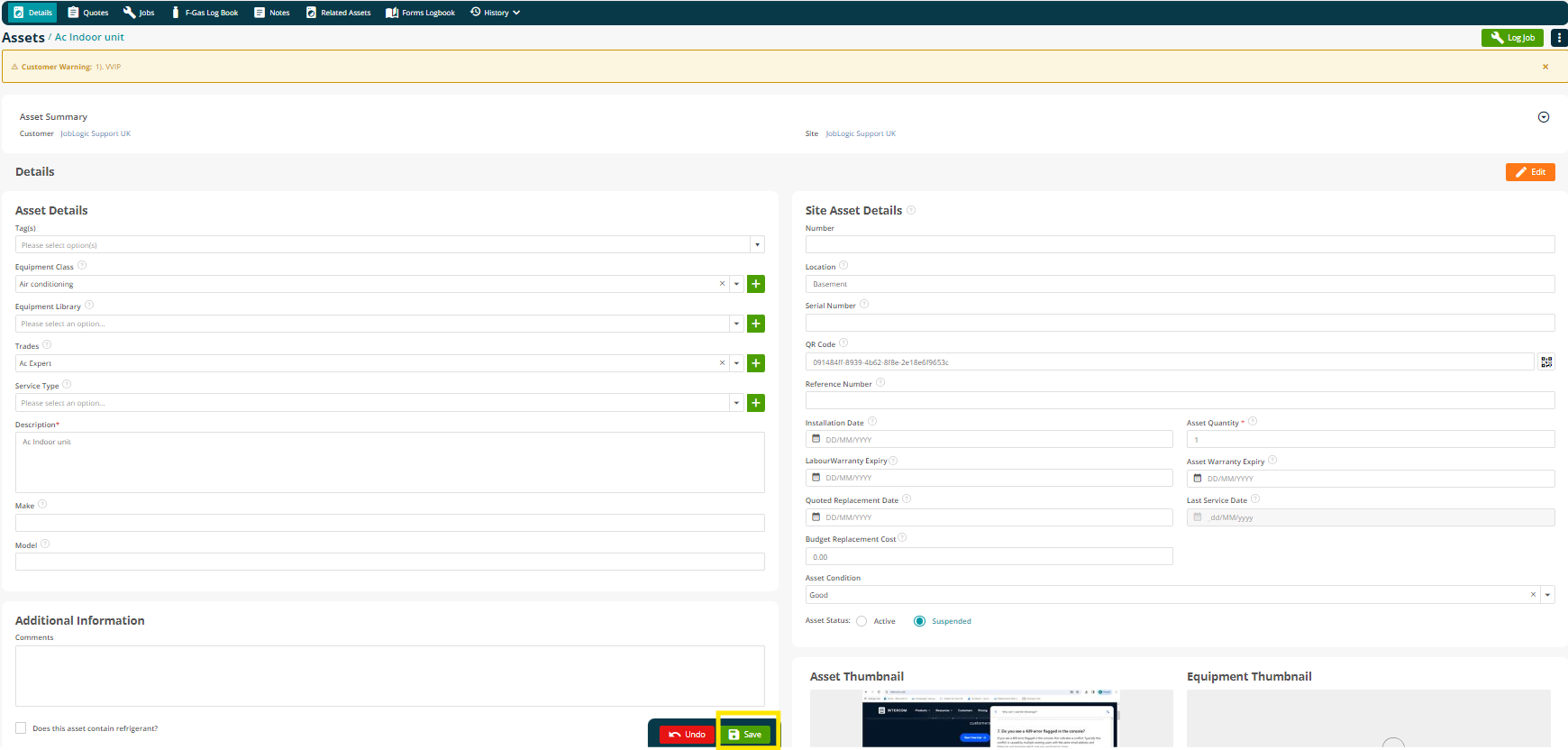
Click Save to finalise your changes.
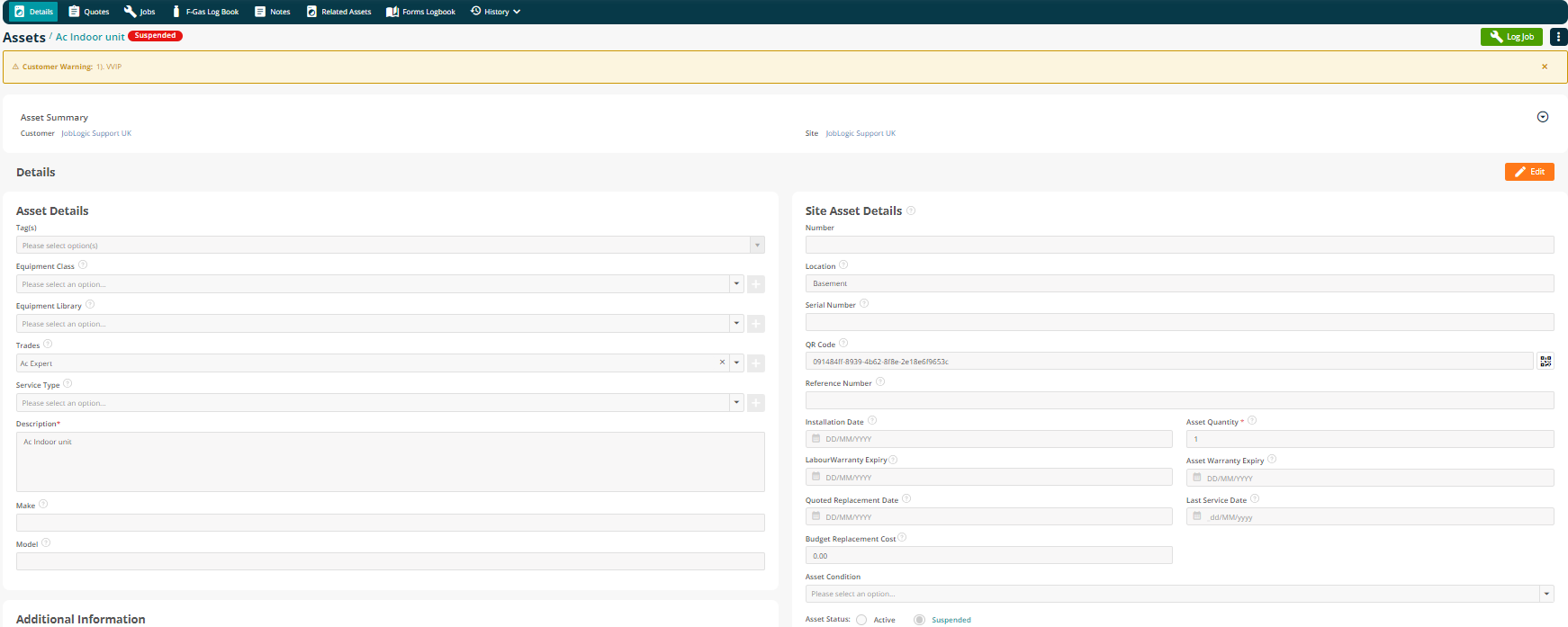
The Asset status will now be updated as suspended and will be reflected on the Asset details page.
Back on the All Asset list, your Suspended assets are easily identified by clicking into the Suspended tab.
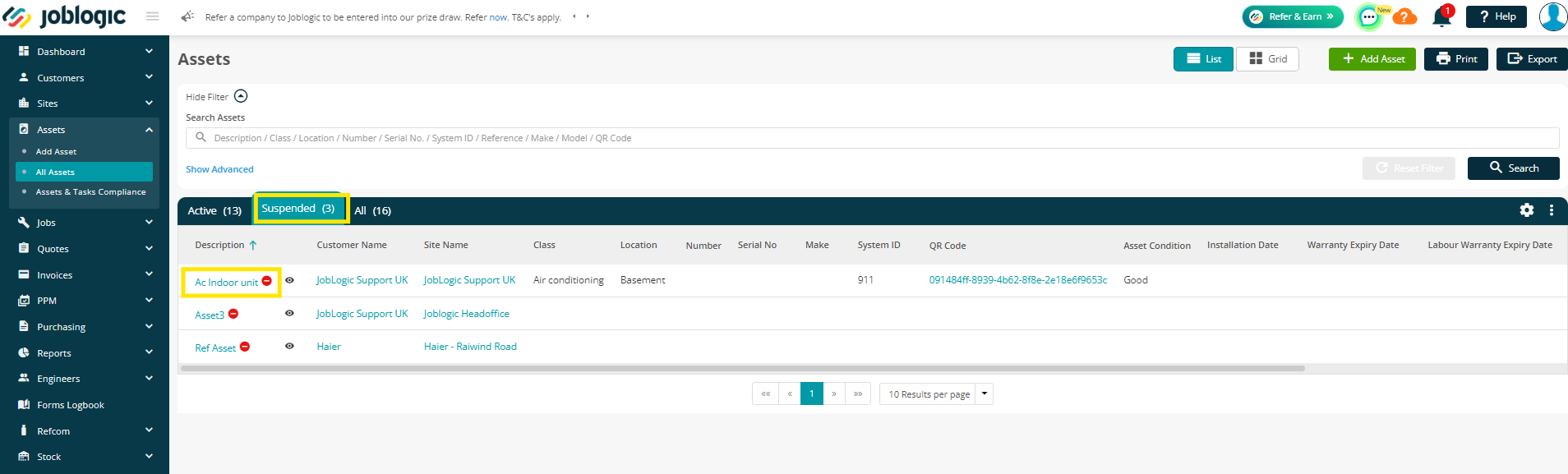
It is important to note that once an asset is suspended, they will not appear in the assets section while logging new work. But the historical data will remain intact and would be available for the user to preview anytime.
If the situation changes again, you can simply follow the above steps to re-tick the Active button.
Further Support
For further information or assistance with the above, contact our Support Team on 0800 326 5561 or email support@joblogic.com. Alternatively, our Customer Success Management team can be reached by emailing customersuccess@joblogic.com
Publishing Details
This document was written and produced by Joblogic’s Technical Writing team and was last updated on the date specified above. Be aware that the information provided may be subject to change following further updates on the matter becoming available or new releases within the system. Additionally, details within the guide may vary depending on your Joblogic account’s user permissions and settings or the electronic device being used.